
CAD Generation & Editing
Quatrion treats generated geometry as an editable feature program, not a frozen mesh. Sketches and multi-view inputs become feature recipes that are validated and previewed through the CAD kernel, so engineers can inspect, correct, and keep editing the result.
How Quatrion turns drawings, multi-view inputs, and design intent into editable CAD feature recipes — validated and previewed before any geometry is committed.
From drawings to an editable solid
Drop in front, side, and top views. Quatrion reads the sketch geometry from each view, reconciles them into one consistent shape, and proposes an editable 3D solid with a replayable feature program and a bill of materials.
Cross-view checks run before any solid is built: footprint and silhouette have to agree across views, and disagreements surface as visible warnings rather than silent errors.
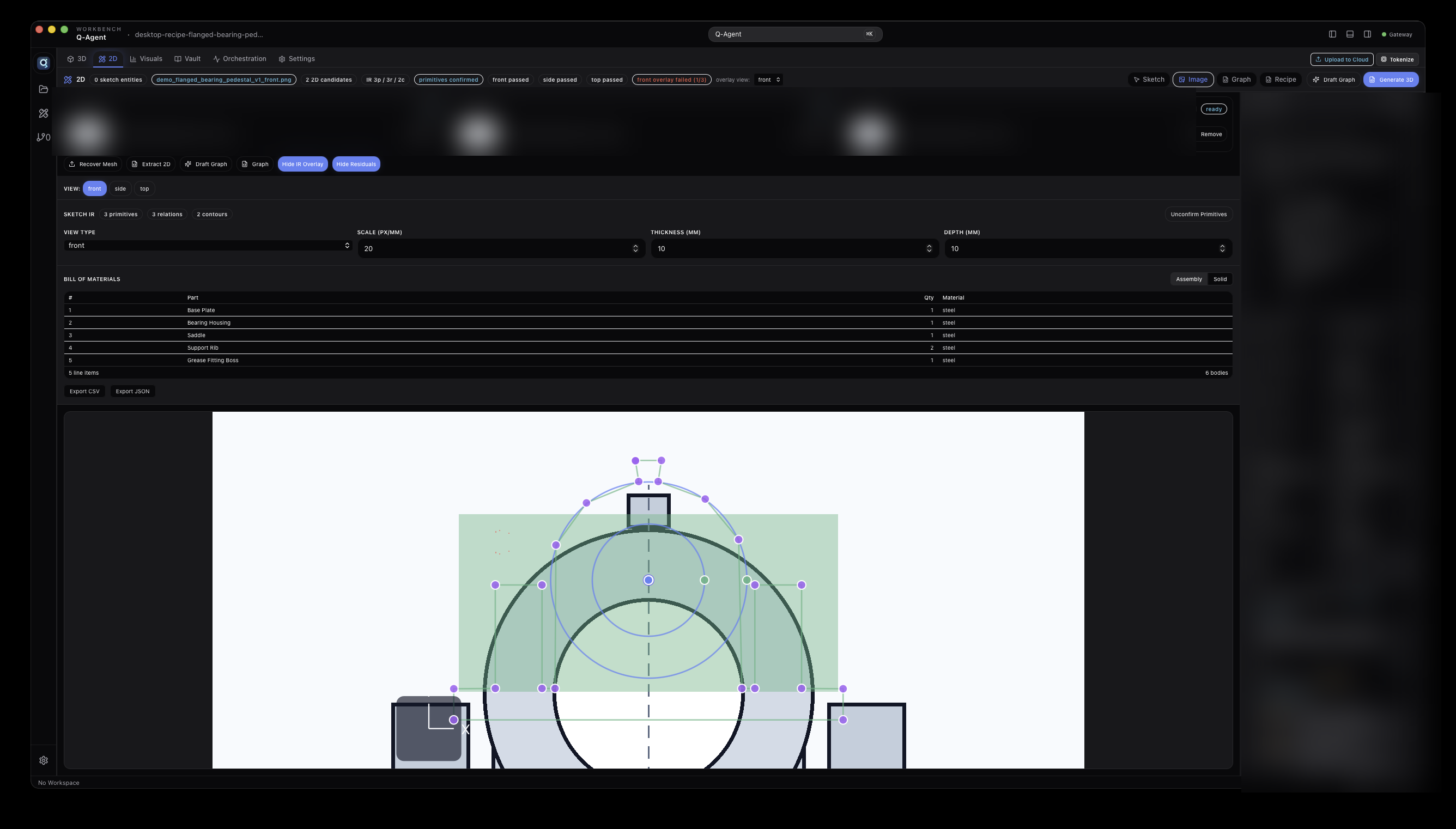
This is first-pass reconstruction for review. The workbench shows its checks, assumptions, and any view mismatches instead of hiding them.
Editable feature recipes, not frozen meshes
- Generated geometry is expressed as a feature recipe with a finite, typed operation vocabulary.
- Recipes are validated and previewed before geometry is committed.
- Each run carries operation-level provenance so the result can be inspected and replayed.
- Output includes an aggregate solid plus a bill of materials for multi-body parts.
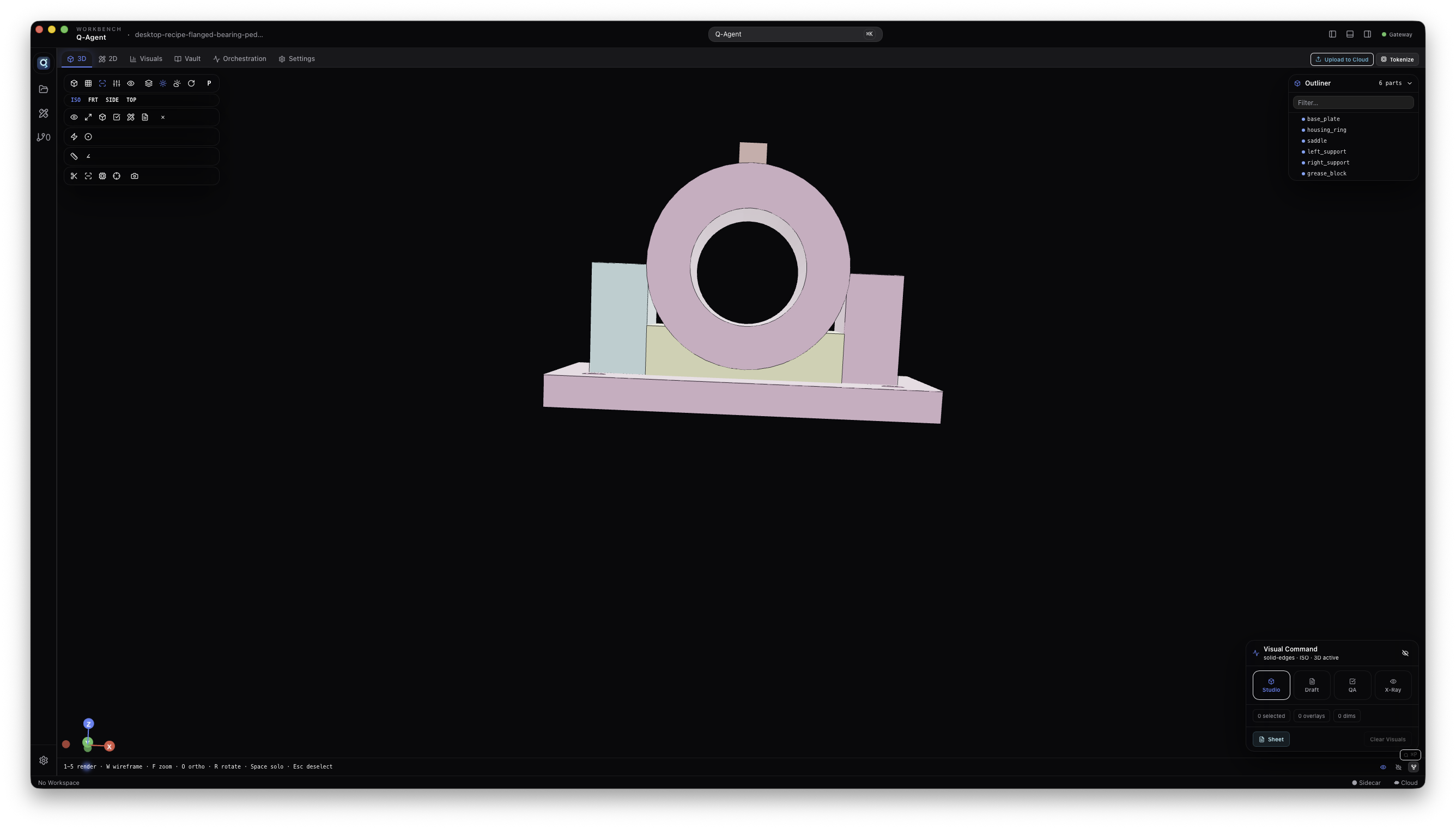
Edit sessions on imported models
Imported models can be edited through bounded edit sessions with create, preview, apply, and undo. Changes move through an approval loop so an engineer stays in control of what is committed.
Boundaries
- First-pass reconstruction is for review: engineers confirm and edit the result before release.
- Quatrion generates and validates editable feature recipes; it is not fully automatic arbitrary CAD generation from any input.
- Single-part and multi-step feature recipes are the strong path today; multi-part assembly representation is a planned capability.
- Provenance and debug geometry can include construction intermediates; the reviewed scene shows the aggregate or final solid.